Services
What We Offer
We take the stress out treating your cardiac patients

Courses
Comprehensive on-demand courses that break down complex cardiology concepts into practical, easy-to-follow lessons you can apply immediately in practice
Clinical Guides
Practical, evidence-based clinical guides designed to help veterinary professionals make confident decisions with clarity and efficiency. Focused on real-world application, these resources simplify complex cardiology for everyday practice.
Telemedicine
Expert telemedicine consultations led by a board-certified veterinary cardiologist, providing accessible case support, second opinions, and practical recommendations for cardiology patients
Speaking
Presentations led by a board-certified veterinary cardiologist with experience in general practice, emergency medicine, research, and wellness coaching. As a National Academy of Sports Medicine Certified Personal Trainer and Precision Nutrition certified coach in nutrition, sleep, stress, and recovery, I offer practical talks on cardiology and veterinary wellness.
My Story
Dr. Christina Bove
Christina Bové is a board-certified veterinary cardiologist dedicated to helping pets with heart disease live longer, healthier lives while supporting the veterinary teams who care for them. She earned her Doctor of Veterinary Medicine from Cornell University College of Veterinary Medicine. She did a combined cardiology residency and Master’s degree at Colorado State University College of Veterinary Medicine and Biomedical Sciences. She is a Diplomate of the American College of Veterinary Internal Medicine (Cardiology).

“Cardiology is more than treating the heart—it’s combining science, skill, and compassion to give every patient the greatest chance to thrive.”
Testimonials
What Our Clients Say
Dr. Bové is known for her expertise, professionalism, and compassionate approach to both patients and people. With experience across specialty cardiology, emergency medicine, general practice, mobile practice, and education, she is valued for clear communication, practical recommendations, and a collaborative style that helps pets, owners, and veterinary teams feel supported and confident.
"Dr. Bove is great to work with! She provides a reliable, helpful and caring telemedicine service. Her reports offer clear, detailed guidance, and she is responsive to questions."

“Dr. Bove is a consistently informative and inspiring speaker who brings both clarity and practicality to every presentation. Her ability to break down complex topics—whether in cardiology or wellness—into a clear, easy-to-follow framework has significantly expanded my knowledge and confidence in patient care. Beyond deepening my understanding of disease processes, her insights have also enhanced how I communicate with both pet parents and veterinary teams. Her passion for health and cardiology is truly contagious, and I highly recommend her for any speaking engagement.”

"Dr. Bove provides a wealth of knowledge with an emphasis on wellness both inside and outside the veterinary hospital. One of the most valuable tools she provides are short and long-form arrhythmia education. The arrhythmia pocket guides should be a staple in every clinic library from general practice to emergency and specialty. They provide quick ways of identifying arrhythmias and even more importantly, when intervention is warranted. I can honestly say that I am a more capable veterinarian because of Dr. Bove."

Inspire Cardiology Blogs
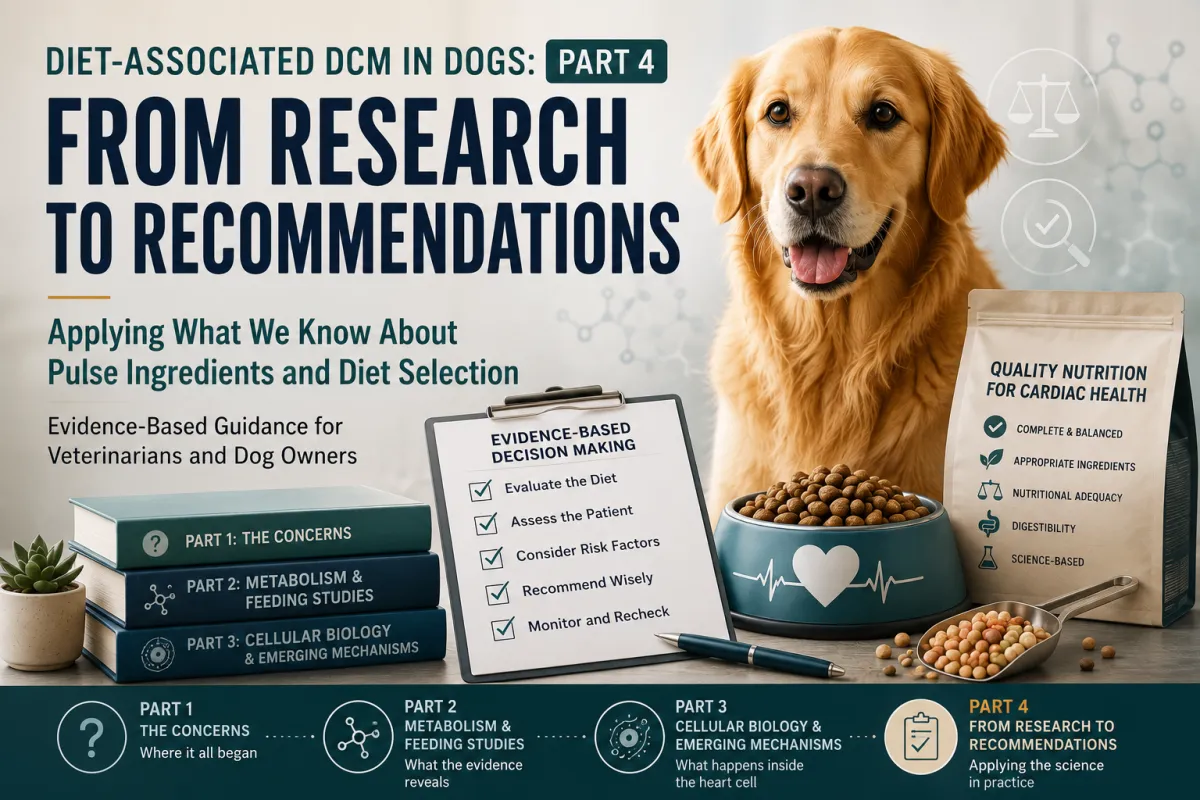
Diet-Associated Dilated Cardiomyopathy in Dogs: From Grain-Free Diets to Cellular Biology — Part 4
Diet-Associated Dilated Cardiomyopathy in Dogs: From Grain-Free Diets to Cellular Biology — Part 4

From Research to Recommendations: An Evidence-Based Approach to Pulse Ingredients and Diet Selection
By Christina Bové, DVM, MS, DACVIM (Cardiology)
Putting the Science Into Practice
Over the past three articles, we've followed the remarkable evolution of diet-associated dilated cardiomyopathy (daDCM).
We began with the early reports linking certain commercial diets to a potentially reversible form of DCM. We explored taurine deficiency, pulse ingredients, metabolomics, feeding studies, and the emerging cellular biology involving autophagy, lysosomes, phospholipidosis, and mitochondrial function.
While many mechanistic questions remain unanswered, the clinical approach has become considerably clearer.
But while researchers continue working to understand why diet-associated DCM develops, veterinarians are faced with a much more practical question every day:
"What should I actually recommend?"
Owners don't ask about metabolomics.
They ask whether they should change foods.
They ask whether peas are dangerous.
They ask whether grain-free diets are safe.
They ask which diet they should buy tomorrow.
The good news is that while many mechanistic questions remain unanswered, our clinical approach has become considerably clearer.
Although recommendations will undoubtedly continue to evolve, several practical principles are now well supported by the available evidence.
The Biggest Lesson: Stop Asking If a Diet Is Grain-Free
If there is one lesson that has emerged from nearly a decade of research, it is this:
The conversation has moved beyond grain-free diets.
When the FDA announced its investigation in 2018, attention understandably focused on grain-free diets because many affected dogs had been eating them.
At the time, this seemed like the most logical explanation.
However, as additional studies accumulated, it became clear that the absence of grains alone could not explain what veterinarians were seeing.
Dogs consuming grain-inclusive diets also developed suspected diet-associated DCM.
Many affected dogs had normal taurine concentrations.
Foodomics studies demonstrated complex biochemical differences extending far beyond individual nutrients.
Experimental feeding trials showed measurable metabolic and cardiac changes despite normal taurine concentrations.
Emerging cellular research suggested that altered metabolism—not simply nutrient deficiency—might influence lysosomal function, phospholipid metabolism, and mitochondrial health.
Each new study added another piece to the puzzle.
Collectively, these findings changed the question veterinarians should be asking.
Instead of asking:
"Is this diet grain-free?"
We should now ask:
"How is this diet formulated?"
That distinction may seem subtle, but it fundamentally changes how we evaluate nutrition.
A grain-free diet is not automatically harmful.
Likewise, a grain-inclusive diet is not automatically reassuring.
Some grain-free diets have never been associated with reported cases of diet-associated DCM.
Conversely, some grain-inclusive diets contain multiple pulse ingredients and share many of the same formulation characteristics that have attracted attention over the past decade.
Simply reading "grain-free" on the front of a bag tells us very little about the nutritional quality of the formulation.
Likewise, terms such as natural, holistic, ancestral, premium, human-grade, limited ingredient may appeal to consumers but provide little information about the science supporting the diet.
The focus has shifted away from marketing language and toward nutritional formulation.
That represents one of the most important advances to emerge from this entire investigation.
Why Recommendations Changed
One criticism sometimes directed toward veterinarians is that recommendations have changed over time.
In reality, that is exactly how science should work.
The earliest reports generated important observations.
Subsequent investigations tested those observations.
As additional data became available, our understanding improved.
The recommendation to move beyond grain-free diets was not because the original observations were incorrect.
Rather, it reflects that we now possess considerably more information than we did in 2018.
Today we know that:
Dietary formulation is more important than grain status
Taurine deficiency explains only a subset of cases
Metabolomic alterations occur long before clinical disease develops
Feeding studies demonstrate measurable physiologic effects
Reverse remodeling supports a nutritional contribution
Multiple metabolic pathways appear to be involved
Good medicine evolves alongside good science.
Diet-associated DCM is an excellent example of why veterinarians must remain willing to adapt recommendations as new evidence emerges.
Pulse Burden: Moving Beyond Individual Ingredients
Perhaps the most important concept to emerge from recent nutrition research is pulse burden.
Rather than asking whether a diet contains peas or lentils, researchers have begun asking a different question:
How much of the diet depends upon pulse-derived ingredients?
Pulse ingredients include legumes such as:
Peas
Lentils
Chickpeas
Beans
These ingredients are not inherently harmful.
In fact, they provide valuable sources of protein, fiber, vitamins, minerals, and other nutrients.
The concern is not the ingredient itself.
The concern is how heavily the formulation relies on these ingredients.
Modern pet foods often contain pulse fractions, including:
Pea protein, Pea fiber, Pea starch, Pea flour
Although these ingredients appear separately on the ingredient panel, they all originate from the same plant.
Consequently, a formulation listing peas, pea protein, pea starch, and pea fiber may rely much more heavily on peas than many owners—or even veterinarians—initially realize.
This practice, sometimes referred to as ingredient splitting, makes evaluating diets considerably more challenging.
Rather than concentrating one ingredient into a single listing, manufacturers may separate it into several components, each appearing independently on the ingredient panel.
The result is that ingredient lists can underestimate how much of the formulation actually originates from pulse-derived material.
This is one reason why veterinarians should avoid making recommendations based solely on the first few ingredients.
Ingredient lists provide useful information—but they rarely tell the entire story.
Instead, they should be interpreted within the context of the overall formulation, the manufacturer's nutritional expertise, and the available scientific evidence.
Pulse Burden Versus Pulse Diversity
Closely related to pulse burden is another emerging concept: pulse diversity.
Researchers have begun recognizing that the number of different pulse ingredients within a formulation may also be important.
For example, compare two hypothetical diets.
Diet A
Chicken
Rice
Oats
Peas
Diet B
Chicken
Peas
Pea protein
Lentils
Chickpeas
Pea fiber
Both diets contain peas.
However, Diet B relies much more heavily on pulse-derived ingredients.
Current evidence suggests that this type of formulation deserves closer evaluation—not because any single ingredient has been proven harmful, but because many diets associated with reported cases have shared this characteristic.
The discussion has therefore shifted from asking whether a diet contains peas to asking:
What is the overall pulse burden of this formulation?
That distinction represents one of the most important practical lessons veterinarians can apply when discussing nutrition with clients.
Evaluating a Diet: Moving Beyond the Ingredient List
One of the most important lessons to emerge from the diet-associated DCM investigation is that choosing a pet food involves far more than reading the ingredient list.
Many owners—and even veterinarians—naturally focus on the first several ingredients listed on the back of the bag. While ingredient lists certainly provide useful information, they tell us surprisingly little about whether a diet is likely to provide safe, complete, and balanced nutrition over the lifetime of the dog.
An ingredient list cannot tell you:
How digestible the nutrients are
Whether amino acids remain biologically available after processing
Whether ingredients interact with one another
How the food performs in long-term feeding studies
Whether rigorous quality-control measures are in place
Two diets with very similar ingredient lists may differ dramatically in nutritional quality because of differences in formulation, ingredient sourcing, manufacturing, and scientific oversight.
That is why veterinarians should avoid evaluating diets solely by reading the back of the bag.
Instead, we should evaluate both the formulation and the company behind it.
The WSAVA Approach
One of the most valuable resources available to veterinarians is the nutritional assessment framework developed by the World Small Animal Veterinary Association (WSAVA) Global Nutrition Committee.
Rather than encouraging veterinarians to choose diets based on marketing claims or individual ingredients, WSAVA recommends evaluating the manufacturer and the science supporting the formulation.
This approach aligns well with how we evaluate other aspects of veterinary medicine.
When choosing a medication, we don't simply review the active ingredient—we consider the research supporting its use, manufacturing quality, clinical trials, and safety data.
Nutrition deserves the same evidence-based approach.
Does the Company Employ Qualified Nutrition Experts?
One of the first questions I ask is:
Who formulated this diet?
Ideally, commercial pet foods should be developed by professionals with advanced training in companion animal nutrition, including:
Board-certified veterinary nutritionists
PhD animal nutritionists
Veterinary scientists with expertise in formulation and nutritional physiology
Formulating a complete and balanced diet is considerably more complex than simply combining ingredients that meet minimum nutrient requirements.
Nutritionists must consider:
Nutrient digestibility
Amino acid bioavailability
Ingredient interactions
Processing effects
Ingredient variability
Long-term nutritional adequacy
These factors cannot be appreciated by looking at the ingredient list alone.
Feeding Trials Versus Nutrient Profiles
One of the most misunderstood concepts in pet nutrition is the difference between AAFCO nutrient profiles and AAFCO feeding trials.
Many diets are formulated to meet AAFCO nutrient requirements on paper.
This means the calculated nutrient concentrations meet established minimum standards.
While this is important, formulation alone cannot answer a critical question:
What happens when dogs actually eat the food?
That is where feeding trials become valuable.
During feeding trials, dogs consume the diet under controlled conditions while researchers monitor body weight, clinical health, laboratory parameters, and overall nutritional adequacy.
Although feeding trials have limitations and cannot identify every nutritional concern, they provide substantially stronger evidence than formulation calculations alone.
For this reason, I generally place greater confidence in diets that have undergone feeding trials than those relying solely on nutrient formulation.
Does the Company Invest in Research?
Another question I encourage veterinarians to ask is:
Does the manufacturer contribute to veterinary nutrition research?
Companies that publish peer-reviewed studies demonstrate an ongoing commitment to advancing nutritional science.
Research may include:
Digestibility studies, Amino acid availability, Metabolomics, Feeding trials, Life-stage nutrition, Therapeutic diets, and Long-term health outcomes.
These investigations require considerable financial investment and scientific expertise.
While research alone does not guarantee a perfect diet, it does reflect a commitment to evidence-based nutrition rather than marketing alone.
Quality Control Matters
Even the best formulation can fail if manufacturing standards are inconsistent.
Quality-control programs help ensure that every bag of food contains what the label claims and that nutrient concentrations remain consistent over time.
Important questions include:
Does the company own its manufacturing facilities?
How are ingredients tested before production?
How is nutrient consistency monitored?
What quality assurance programs are in place?
How are recalls investigated and prevented?
These are not questions most owners think to ask—but they are essential when evaluating long-term nutritional safety.
Transparency Builds Confidence
Companies committed to nutritional science should be able to answer detailed questions about their products.
Examples include:
Caloric density, nutrient analyses beyond the guaranteed analysis, digestibility data, ingredient sourcing, quality-control procedures, formulation expertise.
Transparency does not guarantee nutritional quality, but it does provide veterinarians with greater confidence that recommendations are based on science rather than marketing.
Practical Recommendations
One of Dr. Lisa Freeman's greatest contributions to this field has been helping veterinarians simplify an incredibly complex topic.
Rather than asking whether a diet is grain-free, she has encouraged clinicians to pay attention to the overall formulation, particularly the prominence of pulse ingredients.
One practical recommendation that has emerged from her lectures and educational materials is to take a closer look at diets containing two or more pulse ingredients among the primary ingredients.
This is not a validated threshold for disease, nor does it mean that every such diet is unsafe.
Instead, it serves as a practical screening tool—a way to identify diets that deserve a more careful evaluation, especially in dogs with:
Suspected diet-associated DCM
Ventricular arrhythmias
Unexplained systolic dysfunction
Breeds genetically predisposed to cardiomyopathy
This recommendation reflects the direction of the current literature rather than a rigid rule.
It also illustrates an important point:
The goal is not to eliminate every diet containing peas or lentils.
The goal is to identify formulations that rely heavily on multiple pulse ingredients or pulse fractions and consider whether a better-supported alternative may be appropriate.
Practical Pulse Burden Assessment
When reviewing a diet history, use four simple questions.
1. How many pulse ingredients are present?
Look for peas, lentils, chickpeas, beans, and related ingredients.
One pulse ingredient appearing farther down the ingredient list is generally less concerning than several pulse ingredients listed near the top.
2. Are pulse fractions present?
Examples include: pea protein, pea fiber, pea starch, pea flour.
These ingredients increase the overall pulse burden even though they appear as separate ingredients.
3. Where do they appear?
Ingredients are listed in descending order by weight before processing.
Multiple pulse ingredients among the first several ingredients suggest they contribute substantially to the formulation.
4. How much does the diet rely on pulses overall?
This is perhaps the most important question.
A diet containing:
Peas
Pea protein
Pea fiber
Pea starch
Lentils
Chickpeas
has a much different nutritional profile than a diet containing a single pulse ingredient lower on the ingredient list.
Rather than focusing on one ingredient in isolation, I evaluate the overall pulse burden and integrate that information with the manufacturer's nutritional expertise, feeding trials, published research, and the individual dog's clinical status.
No single factor determines whether I recommend changing a diet.
Instead, I consider the complete picture.
What I Tell My Clients
When discussing nutrition with owners, I try to keep the conversation simple.
I don't recommend diets because they are grain-free.
I don't avoid diets simply because they contain peas.
When I recommend a diet, I generally encourage owners to choose one produced by a manufacturer that has:
Decades of experience in companion animal nutrition
Full-time board-certified veterinary nutritionists and PhD nutrition scientists involved in formulation
An active peer-reviewed nutrition research program
Extensive AAFCO feeding trial experience
Dets produced by manufacturers that align with the WSAVA nutritional assessment recommendations
Robust quality-control and manufacturing standards
A long history of producing complete and balanced diets for healthy and diseased dogs.
These manufacturers have invested heavily in nutritional science over many decades and currently provide the strongest body of evidence supporting the safety and nutritional adequacy of their formulations.
I encourage owners to choose diets supported by strong nutritional science, evaluate the overall formulation rather than individual ingredients, and avoid making decisions based solely on marketing claims or social media trends.
An Important Reassurance
One point that is often overlooked in discussions surrounding diet-associated DCM is this:
The overwhelming majority of commercially available complete and balanced dog foods have never been associated with reported cases of diet-associated DCM.
That is reassuring for both veterinarians and pet owners.
While no commercial diet can be considered completely risk-free, current evidence has not identified widespread concerns with traditional formulations produced by manufacturers that invest heavily in nutritional science, feeding trials, quality control, and veterinary nutrition expertise.
This does not mean these companies are immune from future discoveries.
Rather, it reflects that decades of nutritional research and continuous evaluation provide veterinarians with greater confidence when recommending these diets.
For dogs diagnosed with suspected diet-associated DCM—or those considered at increased risk—I generally recommend transitioning to one of these well-established formulations while continuing appropriate cardiac therapy.
My recommendation is based on the strength of the nutritional science, not on brand recognition.
Recommendations for Healthy Dogs
For healthy dogs with no evidence of heart disease, my goal is simple:
Recommend a complete and balanced diet supported by strong nutritional science.
I generally encourage owners to select diets that are formulated by qualified nutrition experts, have undergone feeding trials, are produced by manufacturers with robust quality-control programs, are supported by peer-reviewed research; and do not rely heavily on multiple pulse ingredients or pulse fractions as major components of the formulation.
It is based on choosing diets with the strongest scientific support currently available.
Recommendations for Dogs at Increased Cardiac Risk
Dogs predisposed to dilated cardiomyopathy deserve additional consideration.
This includes breeds such as:
Doberman Pinschers. Great Danes, Boxers, Irish Wolfhounds, Newfoundlands, American and English Cocker Spaniels, Golden Retrievers
Because these dogs already possess an increased baseline risk for myocardial disease, I generally recommend minimizing additional uncertainty whenever possible.
Although research continues to evolve, I prefer diets supported by extensive nutritional research and a lower overall pulse burden in these patients.
Recommendations for Dogs with Suspected Diet-Associated DCM
When I evaluate a dog with suspected diet-associated DCM, nutrition becomes part of the treatment plan.
My typical approach includes:
Step 1: Obtain a complete diet history
Ask about: current diet, previous diets, treats, table foods, supplements and homemade foods. Small dietary details often become surprisingly important.
Step 2: Perform a complete cardiac evaluation
This typically includes:
Echocardiography
Thoracic radiographs when indicated
ECG or Holter monitoring if arrhythmias are suspected
Blood pressure measurement when appropriate
Step 3: Consider whole blood and plasma taurine
Although taurine deficiency does not explain every case, it remains an important and potentially reversible cause of cardiomyopathy especially in dogs with known susceptibility. Always measure taurine in cats with DCM!
Whole blood taurine concentrations are generally preferred because they better reflect tissue stores than plasma taurine concentrations.
Because supplementation is inexpensive and well tolerated, many cardiologists—including myself—often begin taurine supplementation while results are pending when clinical suspicion is high.
Step 4: Recommend Dietary Modification
If the formulation raises concern because of a high pulse burden or other nutritional considerations, I generally recommend transitioning to a complete and balanced diet supported by strong nutritional research.
Dietary modification should always be performed gradually unless immediate change is medically necessary.
Step 5: Continue Conventional Cardiac Therapy
Diet alone is rarely sufficient.
Medical therapy should be guided by the dog's cardiac diagnosis and may include:
Pimobendan
Diuretics if in heart failure
ACE inhibitors
Antiarrhythmic medications
Taurine supplementation when appropriate
Step 6: Monitor for Reverse Remodeling
One of the most rewarding aspects of managing suspected diet-associated DCM is watching some dogs improve.
Serial echocardiography allows us to evaluate:
Systolic function
Ventricular and atrial dimensions for chamber remodeling
Improvement over time supports the concept that nutrition contributed to the disease process.
A Practical Clinical Algorithm
When evaluating a dog with suspected diet-associated DCM, my thought process is relatively straightforward.

My Clinical Perspective
One of the greatest lessons this field has taught me is the importance of humility.
Nutrition is extraordinarily complex.
As cardiologists, we naturally want simple answers.
Unfortunately, biology rarely works that way.
Instead of asking whether peas are "good" or "bad," or whether grain-free diets are "safe" or "unsafe," I encourage veterinarians to step back and evaluate the complete picture.
In my practice, I don't recommend diets because they are grain-free.
I don't reject diets because they contain peas.
I recommend diets because they are supported by strong nutritional science, formulated by qualified experts, and backed by evidence demonstrating long-term nutritional adequacy.
Likewise, I evaluate pulse burden as one piece of the puzzle, not the entire puzzle.
I believe this balanced approach best reflects the current literature and allows recommendations to evolve alongside the science rather than becoming anchored to outdated assumptions.
Myths vs. Facts: Separating Evidence from Opinion
Few topics in veterinary medicine have generated as much discussion—or misinformation—as diet-associated dilated cardiomyopathy. Headlines, social media posts, and online forums often present the issue in overly simplistic terms, making it difficult for both veterinarians and pet owners to distinguish established evidence from speculation.
One of the greatest challenges has been that the science has evolved rapidly. Recommendations that seemed reasonable in 2018 have been refined as additional research became available. Rather than viewing these changes as contradictions, they should be viewed as evidence that veterinary medicine continues to follow the scientific process.
The following statements reflect what the current body of evidence supports.

What We Know Today
After nearly a decade of research, several conclusions have remained remarkably consistent across multiple independent studies.
Current evidence supports that:
Diet-associated dilated cardiomyopathy is a genuine clinical entity in at least a subset of dogs.
Many affected dogs demonstrate reverse remodeling following dietary modification and appropriate cardiac therapy.
Dietary formulation appears more important than grain-free status alone.
Pulse-rich formulations have been disproportionately represented among reported cases.
Many affected dogs have normal whole blood taurine concentrations.
Metabolomic and foodomic studies demonstrate significant biochemical differences between diets associated with reported DCM cases and more traditional formulations.
Experimental feeding studies have shown that certain pulse-rich diets can alter nutrient metabolism and cardiac function in healthy dogs before overt disease develops.
Emerging cellular research suggests that altered metabolism may influence lysosomal function, phospholipid metabolism, and mitochondrial health.
Taken together, these findings strongly support that nutrition can influence cardiac biology in ways that extend well beyond a simple nutrient deficiency.
Questions We Still Need to Answer
Although tremendous progress has been made, important questions remain.
Future research will likely focus on:
Identifying why certain dietary formulations affect myocardial metabolism differently than others
Determining why only some dogs develop clinically significant disease
Understanding the role of genetics and breed-specific susceptibility
Investigating whether the intestinal microbiome influences nutrient metabolism
Identifying biomarkers capable of detecting disease before echocardiographic changes occur
Determining how manufacturing processes and ingredient interactions affect long-term nutritional safety
Answering these questions will require continued collaboration between veterinary cardiologists, nutritionists, physiologists, pathologists, and the pet food industry.
Fortunately, that collaboration is already underway.
What I Hope Veterinarians Take Away From This Series
Perhaps the most important message from this four-part series is that nutrition is considerably more complex than individual ingredients.
When the FDA investigation began, the conversation focused largely on grain-free diets.
As additional research accumulated, that conversation evolved to include:
Taurine metabolism
Pulse burden
Foodomics
Metabolomics
Feeding trials
Cellular recycling
Lysosomal biology
Phospholipid metabolism
Mitochondrial function
Each discovery added another layer to our understanding. Rather than disproving earlier work, these studies refined it. That progression is exactly how scientific knowledge should evolve.
As clinicians, our responsibility is to remain open to new evidence while continuing to provide practical, evidence-based recommendations to our clients.
My Final Recommendations
After reviewing the current literature, my clinical recommendations can be summarized in a few key principles.
✔ Obtain a thorough diet history in every dog diagnosed with DCM or unexplained systolic dysfunction.
✔ Evaluate the entire dietary formulation, not simply whether the diet is grain-free.
✔ Consider pulse burden by assessing the number and prominence of pulse ingredients and pulse fractions.
✔ Use the WSAVA nutritional assessment framework when evaluating manufacturers.
✔ Recommend diets supported by qualified nutrition experts, feeding trials, peer-reviewed research, and strong quality-control programs.
✔ Measure whole blood and plasma taurine concentrations when clinically appropriate.
✔ Continue conventional cardiac therapy while implementing dietary modification in dogs with suspected diet-associated DCM.
✔ Reevaluate cardiac function over time to monitor for reverse remodeling.
Most importantly:
✔ Continue learning
The recommendations we make today should continue to evolve as our understanding of nutrition and cardiac biology improves.
Recommended Resources
Diet-associated dilated cardiomyopathy continues to be an active area of research, and recommendations will undoubtedly evolve as new evidence becomes available. I encourage both veterinarians and interested pet owners to seek information from reputable, evidence-based sources rather than relying on marketing claims or social media discussions.
The following resources provide excellent, up-to-date information on canine nutrition and diet-associated DCM:
World Small Animal Veterinary Association (WSAVA) Global Nutrition Committee
The WSAVA Global Nutrition Toolkit provides practical guidance for evaluating pet foods, selecting manufacturers, interpreting pet food labels, and discussing nutrition with clients. The toolkit includes questions veterinarians can ask manufacturers and emphasizes evaluating the science behind a diet rather than marketing claims. WSAVA
Tufts Petfoodology
Developed by the Clinical Nutrition Service at the Cummings School of Veterinary Medicine at Tufts University, Petfoodology offers one of the most comprehensive collections of evidence-based articles on companion animal nutrition. Dr. Lisa Freeman and her colleagues have published numerous educational updates on diet-associated DCM, BEG diets, pulse ingredients, and current research. PETfoodology
U.S. Food and Drug Administration (FDA)
The FDA continues to provide updates regarding its investigation into the relationship between certain dietary formulations and canine dilated cardiomyopathy. Although the investigation remains ongoing, the FDA's publications summarize reported cases, research updates, and frequently asked questions. FDA
Association of American Feed Control Officials (AAFCO)
AAFCO establishes nutritional standards and labeling requirements for commercial pet foods in North America. Understanding the difference between diets that meet AAFCO nutrient profiles and those that have completed feeding trials is an important part of evaluating commercial diets. AAFCO
Peer-Reviewed Veterinary Literature
For veterinarians interested in exploring the primary research, the following journals have published many of the landmark studies discussed throughout this series:
Journal of Veterinary Internal Medicine
Journal of Veterinary Cardiology
Journal of the American Veterinary Medical Association
Scientific Reports
PLOS ONE
Frontiers in Veterinary Science
Reading the original literature remains the best way to stay current as our understanding of diet-associated DCM continues to evolve.
A Final Thought
One of the greatest lessons from the diet-associated DCM story is that science is a process—not a destination.
Although many questions remain unanswered, one principle has become increasingly clear:
Nutrition should be evaluated using the same evidence-based approach that we apply to every other aspect of veterinary medicine.
As new evidence emerges, our understanding will continue to improve, and our recommendations should evolve accordingly. The willingness to question assumptions, critically evaluate new research, and thoughtfully incorporate emerging evidence into clinical practice is one of the defining characteristics of evidence-based veterinary medicine.
That commitment ultimately benefits the patients we serve and strengthens the trust our clients place in us.
Thank you for following this four-part series on diet-associated dilated cardiomyopathy.
My hope is that these articles provide a balanced, practical, and scientifically grounded framework for evaluating diets, counseling owners, and managing dogs with suspected nutritional cardiomyopathy.
The story of diet-associated DCM is still being written.
Fortunately, so is the science.
And that is something every veterinarian should be excited about.
That commitment ultimately benefits the patients we serve and strengthens the trust our clients place in us.
Previous Blog Posts
Diet-Associated Dilated Cardiomyopathy in Dogs: From Grain-Free Diets to Cellular Biology Part 1
Diet-Associated Dilated Cardiomyopathy in Dogs: From Grain-Free Diets to Cellular Biology — Part 2
Diet-Associated Dilated Cardiomyopathy in Dogs: From Grain-Free Diets to Cellular Biology — Part 3
References
Freeman LM, Stern JA, Fries R, Adin DB, Rush JE. Diet-associated dilated cardiomyopathy in dogs: What do we know? Journal of the American Veterinary Medical Association. 2018;253(11):1390-1394.
Adin DB, Freeman LM, Rush JE, et al. Clinical findings and outcome of dogs with suspected diet-associated dilated cardiomyopathy. Journal of Veterinary Internal Medicine. 2021;35:2322-2334.
Walker AL, et al. Clinical and echocardiographic features of dogs with suspected diet-associated dilated cardiomyopathy. Journal of Veterinary Cardiology. 2021.
Smith CE, Freeman LM, Rush JE, et al. Foodomics analysis of commercial dog foods associated with suspected diet-associated dilated cardiomyopathy. Scientific Reports. 2021.
Smith CE, Freeman LM, Rush JE, et al. Metabolomic profiling of dogs with suspected diet-associated dilated cardiomyopathy. Scientific Reports. 2022.
Quilliam CK, et al. Effects of pulse-rich diets on nutrient digestibility and metabolic responses in healthy dogs. Frontiers in Veterinary Science. 2021.
Quilliam CK, et al. Effects of a 28-day feeding trial of grain-containing versus pulse-rich diets on cardiac function, taurine status, and nutrient digestibility in healthy dogs. PLOS ONE. 2023.
Kaplan JL, Stern JA, Fascetti AJ, et al. Taurine deficiency and dilated cardiomyopathy in Golden Retrievers fed commercial diets. PLOS ONE. 2018.
Ontiveros ES, et al. Development of taurine deficiency and dilated cardiomyopathy in Golden Retrievers fed commercial diets. PLOS ONE. 2020.
World Small Animal Veterinary Association. WSAVA Global Nutrition Toolkit. Available from the World Small Animal Veterinary Association.
World Small Animal Veterinary Association. Selecting the Best Food for Your Pet: Recommendations on Selecting Pet Foods.
Association of American Feed Control Officials. Official Publication of the Association of American Feed Control Officials. Current edition.
U.S. Food and Drug Administration. Investigation into Potential Link Between Certain Diets and Canine Dilated Cardiomyopathy. FDA Updates (2018–present).
Freeman LM. Tufts Petfoodology Blog: Diet-Associated Dilated Cardiomyopathy Resource Collection. Cummings School of Veterinary Medicine, Tufts University.
Freeman LM. BEG Diets and Dilated Cardiomyopathy in Dogs. Tufts Petfoodology Blog. 2018.
Freeman LM. Questions Veterinarians Should Ask Pet Food Companies. Tufts Petfoodology.
Freeman LM. Evaluating Pet Foods Beyond the Ingredient List. Tufts Petfoodology.
Freeman LM. Current Perspectives on Diet-Associated Dilated Cardiomyopathy in Dogs. Tufts Clinical Nutrition Service educational resources.
American College of Veterinary Internal Medicine. Consensus recommendations and continuing education resources related to canine nutrition and cardiomyopathy (where applicable).
European Pet Food Industry Federation. Nutritional Guidelines for Complete and Complementary Pet Food for Cats and Dogs.

Want a simple, practical way to feel more confident reading ECGs?
Get my Free ECG Cheat Sheet
A quick-reference guide designed to help you recognize common arrhythmias and make faster clinical decisions in practice.
Want to work with me?
Whether you are seeking expert cardiology support, continuing education, telemedicine consultation, clinical resources, or an engaging speaker for your team or event, I’d love to connect. My goal is to provide practical, compassionate, and evidence-based solutions that help veterinary professionals and the patients they serve thrive.

Contact Us
LEGAL
FOLLOW US


Copyright . . All Rights Reserved.