Services
What We Offer
We take the stress out treating your cardiac patients

Courses
Comprehensive on-demand courses that break down complex cardiology concepts into practical, easy-to-follow lessons you can apply immediately in practice
Clinical Guides
Practical, evidence-based clinical guides designed to help veterinary professionals make confident decisions with clarity and efficiency. Focused on real-world application, these resources simplify complex cardiology for everyday practice.
Telemedicine
Expert telemedicine consultations led by a board-certified veterinary cardiologist, providing accessible case support, second opinions, and practical recommendations for cardiology patients
Speaking
Presentations led by a board-certified veterinary cardiologist with experience in general practice, emergency medicine, research, and wellness coaching. As a National Academy of Sports Medicine Certified Personal Trainer and Precision Nutrition certified coach in nutrition, sleep, stress, and recovery, I offer practical talks on cardiology and veterinary wellness.
My Story
Dr. Christina Bove
Christina Bové is a board-certified veterinary cardiologist dedicated to helping pets with heart disease live longer, healthier lives while supporting the veterinary teams who care for them. She earned her Doctor of Veterinary Medicine from Cornell University College of Veterinary Medicine. She did a combined cardiology residency and Master’s degree at Colorado State University College of Veterinary Medicine and Biomedical Sciences. She is a Diplomate of the American College of Veterinary Internal Medicine (Cardiology).

“Cardiology is more than treating the heart—it’s combining science, skill, and compassion to give every patient the greatest chance to thrive.”
Testimonials
What Our Clients Say
Dr. Bové is known for her expertise, professionalism, and compassionate approach to both patients and people. With experience across specialty cardiology, emergency medicine, general practice, mobile practice, and education, she is valued for clear communication, practical recommendations, and a collaborative style that helps pets, owners, and veterinary teams feel supported and confident.
"Dr. Bove is great to work with! She provides a reliable, helpful and caring telemedicine service. Her reports offer clear, detailed guidance, and she is responsive to questions."

“Dr. Bove is a consistently informative and inspiring speaker who brings both clarity and practicality to every presentation. Her ability to break down complex topics—whether in cardiology or wellness—into a clear, easy-to-follow framework has significantly expanded my knowledge and confidence in patient care. Beyond deepening my understanding of disease processes, her insights have also enhanced how I communicate with both pet parents and veterinary teams. Her passion for health and cardiology is truly contagious, and I highly recommend her for any speaking engagement.”

"Dr. Bove provides a wealth of knowledge with an emphasis on wellness both inside and outside the veterinary hospital. One of the most valuable tools she provides are short and long-form arrhythmia education. The arrhythmia pocket guides should be a staple in every clinic library from general practice to emergency and specialty. They provide quick ways of identifying arrhythmias and even more importantly, when intervention is warranted. I can honestly say that I am a more capable veterinarian because of Dr. Bove."

Inspire Cardiology Blogs
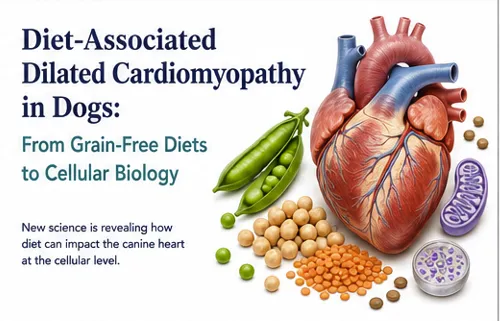
Diet-Associated Dilated Cardiomyopathy in Dogs: From Grain-Free Diets to Cellular Biology Part 1
Diet-Associated Dilated Cardiomyopathy in Dogs: From Grain-Free Diets to Cellular Biology (Part 1)
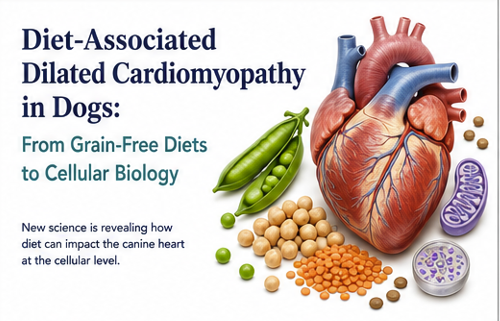
How Our Understanding of Nutritional DCM Has Evolved—and What We Know in 20026
By Christina Bové, DVM, MS, DACVIM (Cardiology)
Over the last decade, few topics in veterinary cardiology have generated as much discussion—and controversy—as diet-associated dilated cardiomyopathy (daDCM).
What initially appeared to be a straightforward question—
"Are grain-free diets causing heart disease?"
—has evolved into one of the most fascinating and rapidly changing areas of veterinary medicine.
Today, our understanding extends far beyond grains. Emerging evidence suggests that diet-associated DCM is likely a complex, multifactorial disease involving nutrition, metabolism, genetics, and cellular biology.
Although many questions remain unanswered, one thing is clear:
The conversation has changed dramatically since 2018.
Why Diet-Associated DCM Matters
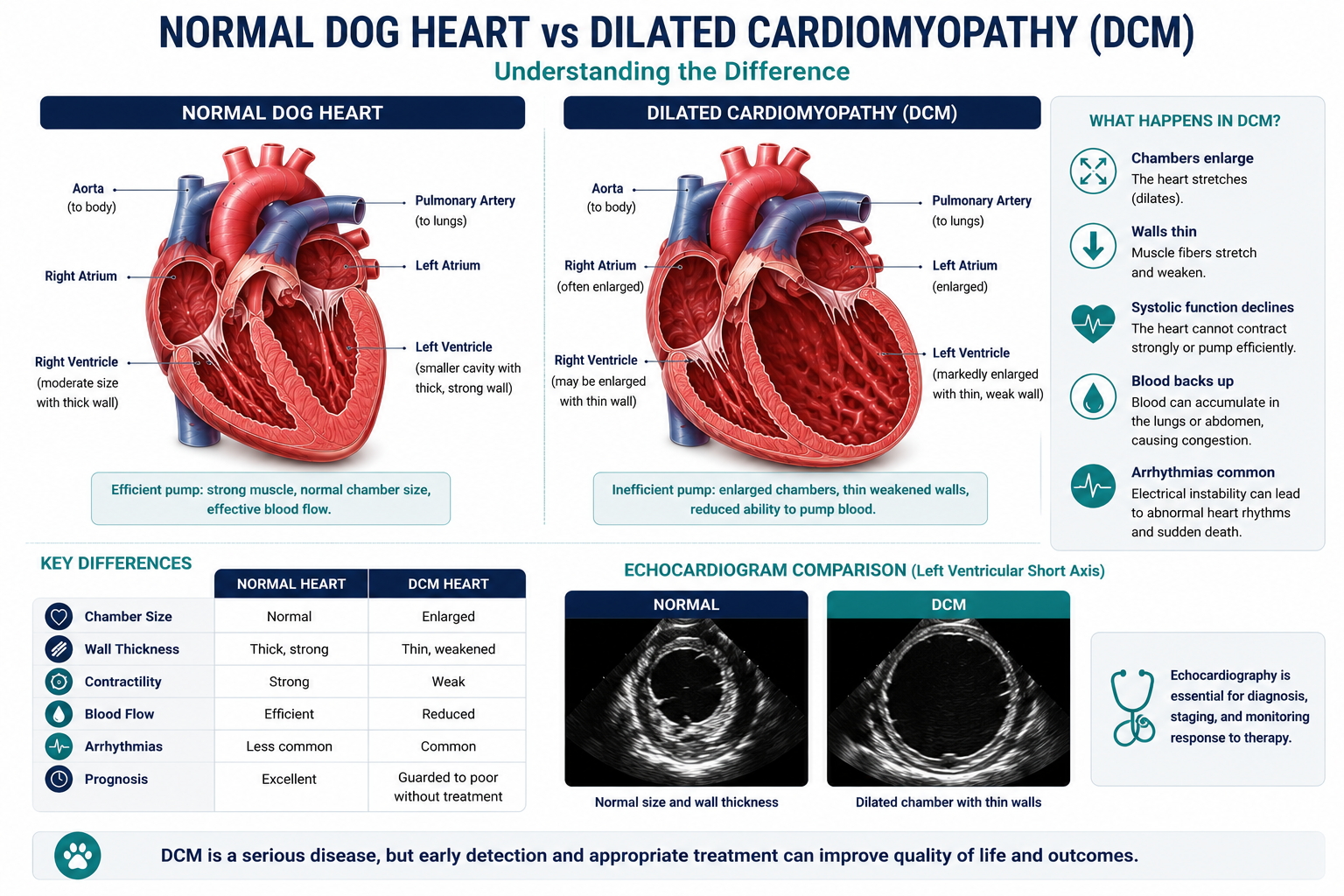
Dilated cardiomyopathy (DCM) is a serious disease characterized by:
Enlargement of the heart chambers
Reduced contractility
Progressive heart failure
Ventricular arrhythmias
Increased risk of sudden death
Unlike many inherited cardiomyopathies, some cases of diet-associated DCM appear to be partially—or even dramatically—reversible following dietary modification and appropriate cardiac therapy.
That possibility of recovery is what makes this disease so important.
Early recognition may improve:
Cardiac function
Quality of life
Long-term survival
Because of this, understanding the relationship between nutrition and heart disease has become increasingly important for veterinarians and pet owners alike.
Traditional Dilated Cardiomyopathy
Historically, DCM was considered primarily a genetic disease affecting breeds such as:
Doberman Pinschers
Great Danes
Irish Wolfhounds
Boxers
Newfoundlands
Portuguese Water Dog
Cocker Spaniel
These dogs typically develop progressive myocardial dysfunction because of inherited abnormalities.
For decades, veterinary cardiologists viewed DCM largely through a genetic lens.
Then something unexpected happened.
Unexpected Breeds Began Appearing
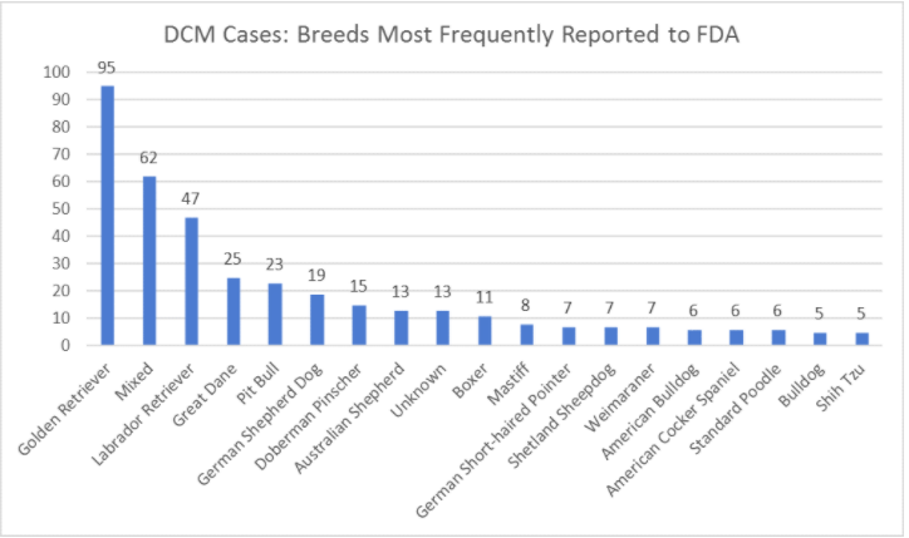
Beginning around 2014–2015, cardiologists started seeing DCM in dogs that traditionally were not considered predisposed.
Examples included:
Golden Retrievers/Goldendoodles
Labrador Retrievers/Labradoodles
Miniature Schnauzers
Shih Tzu
Yorkshire Terrier
Other Mixed-breed dogs
Other small-breed dogs
Even more intriguing, many of these dogs improved after changing diets.
This observation immediately raised an important question:
Could nutrition contribute to heart disease in some dogs?
The FDA Investigation Changed Everything
In July 2018, the U.S. Food and Drug Administration (FDA) announced an investigation into a possible relationship between canine dilated cardiomyopathy and certain diets.
Many affected dogs reportedly consumed foods containing:
Peas
Lentils
Chickpeas;
Potatoes
Other legumes and pulse ingredients.
The FDA emphasized that the issue appeared complex and that causation had not been established.
Nevertheless, the announcement generated tremendous public attention.
Suddenly, veterinarians, breeders, nutritionists, and owners were asking:
"Are grain-free diets causing DCM?"
The Grain-Free Era
Because many reported cases involved grain-free foods, the term "grain-free DCM" quickly entered both veterinary and public discussions.
Later, another term emerged:
BEG Diets
Boutique
Exotic ingredient
Grain-free
These terms were useful initially because they helped identify common characteristics among many diets involved in early reports.
However, as more research accumulated, the limitations of these labels became increasingly apparent.
Why We No Longer Use the Term "Grain-Free DCM"
Current evidence suggests that the disease is far more complicated than simply the absence of grains.
Investigators recognized several important observations:
Not all affected dogs ate grain-free diets
Some dogs improved after switching from one grain-free diet to another
Home-prepared and unconventional diets could also be involved
Multiple dietary patterns appeared capable of producing similar disease
Even in the original review by Freeman and colleagues in 2018*, the authors emphasized that causation had not been established and that multiple factors were likely involved.
As our understanding evolved, many cardiologists moved away from terms such as:
Grain-Free DCM.
BEG diets.
*https://avmajournals.avma.org/view/journals/javma/253/11/javma.253.11.1390.xml
Instead, most experts now prefer:
Diet-Associated Dilated Cardiomyopathy (daDCM)
or
High-Pulse Diet-Associated DCM
These terms better reflect what we currently know—and what we still do not know.
What Are Pulses?
One of the biggest conceptual shifts in recent years has been the focus on pulse ingredients.
Pulses are the edible seeds of legumes and include:
Peas
Lentils
Chickpeas
Split peas
Dry beans
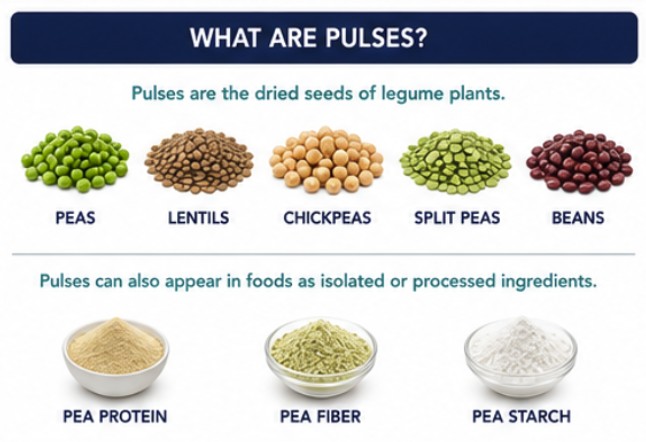
Pet food manufacturers may also use pulse fractions such as:
Pea protein
Pea fiber
Pea starch
Lentil flour
Chickpea protein
Because these ingredients can be separated into multiple components, a single plant may appear several times on an ingredient list.
For example:
Peas
Pea protein
Pea fiber
Pea starch
All may originate from the same ingredient source.
Pulse Burden May Matter More Than Grain Status
Current evidence increasingly suggests that the overall pulse burden ("pulse dose") may be more important than whether a food contains grains.
This represents one of the biggest changes in thinking over the last decade.
Instead of asking:
"Is this food grain-free?"
Many cardiologists now ask:
"How pulse-rich is this food?"
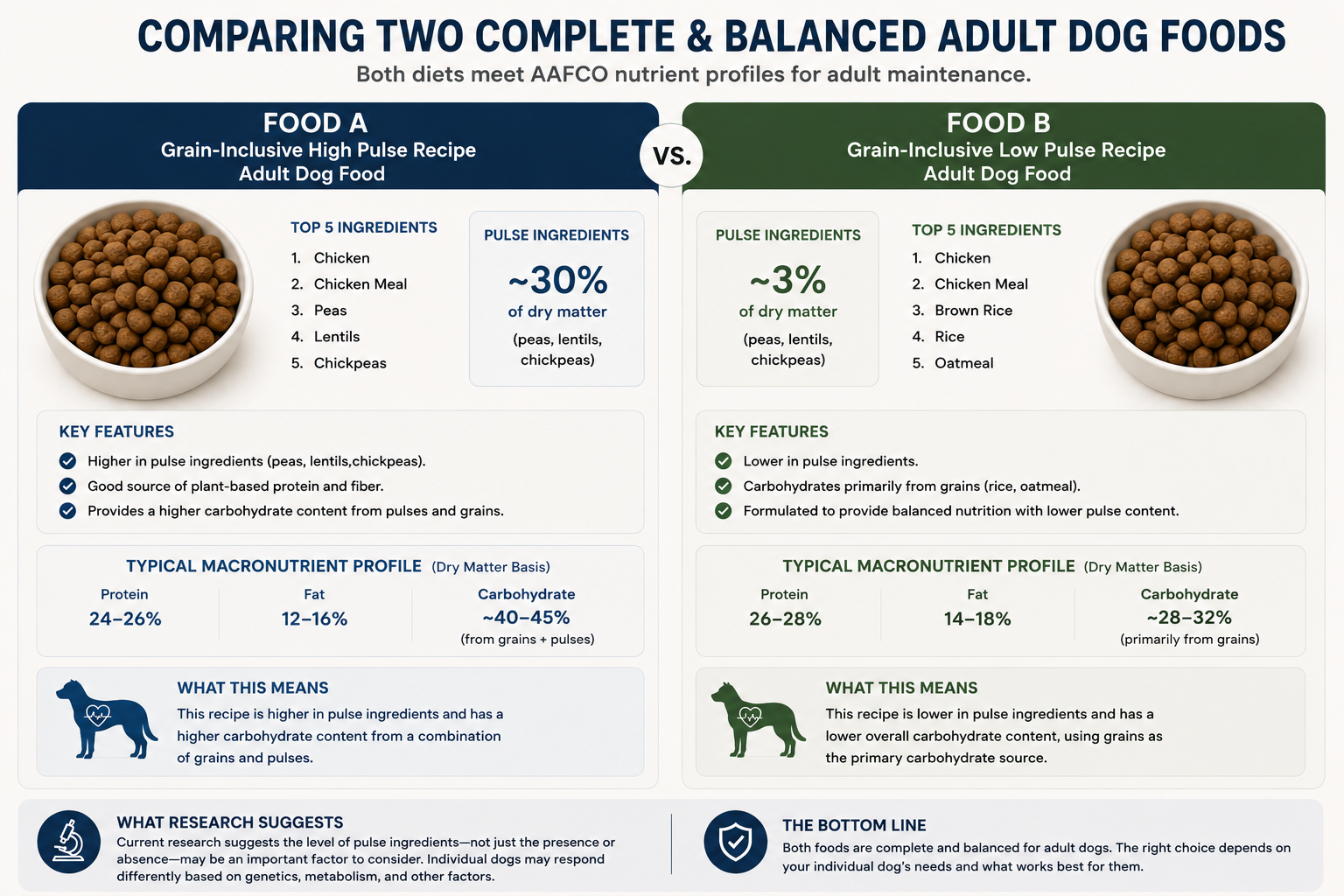
The answer may depend on:
The number of pulse ingredients present
The use of pulse fractions
Ingredient placement on the label;
Duration of feeding
Individual susceptibility
Importantly, this does not mean that peas, lentils, or other pulse ingredients are inherently harmful. Many dogs consume diets containing these ingredients without developing heart disease, and current evidence does not support eliminating all pulses from canine nutrition but to avoid high pulse diets.
The disease is likely far more complicated than a single ingredient causing a single disease.
Why This Disease Is So Complex
Diet-associated DCM represents the intersection of cardiology, nutrition, genetics, and metabolism.
One of the challenges in understanding the disease is that millions of dogs consume diets containing pulse ingredients without developing heart disease, while some affected dogs experience significant improvement following dietary modification.
These observations suggest that diet-associated DCM is unlikely to be caused by a single ingredient or explained by a single mechanism. Instead, current evidence supports a complex interaction among diet composition, metabolism, genetics, and individual susceptibility.
As with many areas of medicine, our understanding continues to evolve as new research emerges.
Looking Ahead
The biggest question facing researchers today is no longer:
Are grains protective?
Instead, investigators are asking:
What metabolic and cellular pathways are being altered?
In Part 2, we'll explore:
The history of taurine deficiency and reversible nutritional cardiomyopathies
Why taurine deficiency does not explain most modern cases
Metabolomics and foodomics research
The emerging concept of pulse burden
Feeding trials that helped change our understanding of the disease
Evidence suggesting that measurable cardiac changes may occur within weeks—not years
As it turns out, the story becomes even more interesting from there.

Want a simple, practical way to feel more confident reading ECGs?
Get my Free ECG Cheat Sheet
A quick-reference guide designed to help you recognize common arrhythmias and make faster clinical decisions in practice.
Want to work with me?
Whether you are seeking expert cardiology support, continuing education, telemedicine consultation, clinical resources, or an engaging speaker for your team or event, I’d love to connect. My goal is to provide practical, compassionate, and evidence-based solutions that help veterinary professionals and the patients they serve thrive.

Contact Us
LEGAL
FOLLOW US


Copyright . . All Rights Reserved.