Services
What We Offer
We take the stress out treating your cardiac patients

Courses
Comprehensive on-demand courses that break down complex cardiology concepts into practical, easy-to-follow lessons you can apply immediately in practice
Clinical Guides
Practical, evidence-based clinical guides designed to help veterinary professionals make confident decisions with clarity and efficiency. Focused on real-world application, these resources simplify complex cardiology for everyday practice.
Telemedicine
Expert telemedicine consultations led by a board-certified veterinary cardiologist, providing accessible case support, second opinions, and practical recommendations for cardiology patients
Speaking
Presentations led by a board-certified veterinary cardiologist with experience in general practice, emergency medicine, research, and wellness coaching. As a National Academy of Sports Medicine Certified Personal Trainer and Precision Nutrition certified coach in nutrition, sleep, stress, and recovery, I offer practical talks on cardiology and veterinary wellness.
My Story
Dr. Christina Bove
Christina Bové is a board-certified veterinary cardiologist dedicated to helping pets with heart disease live longer, healthier lives while supporting the veterinary teams who care for them. She earned her Doctor of Veterinary Medicine from Cornell University College of Veterinary Medicine. She did a combined cardiology residency and Master’s degree at Colorado State University College of Veterinary Medicine and Biomedical Sciences. She is a Diplomate of the American College of Veterinary Internal Medicine (Cardiology).
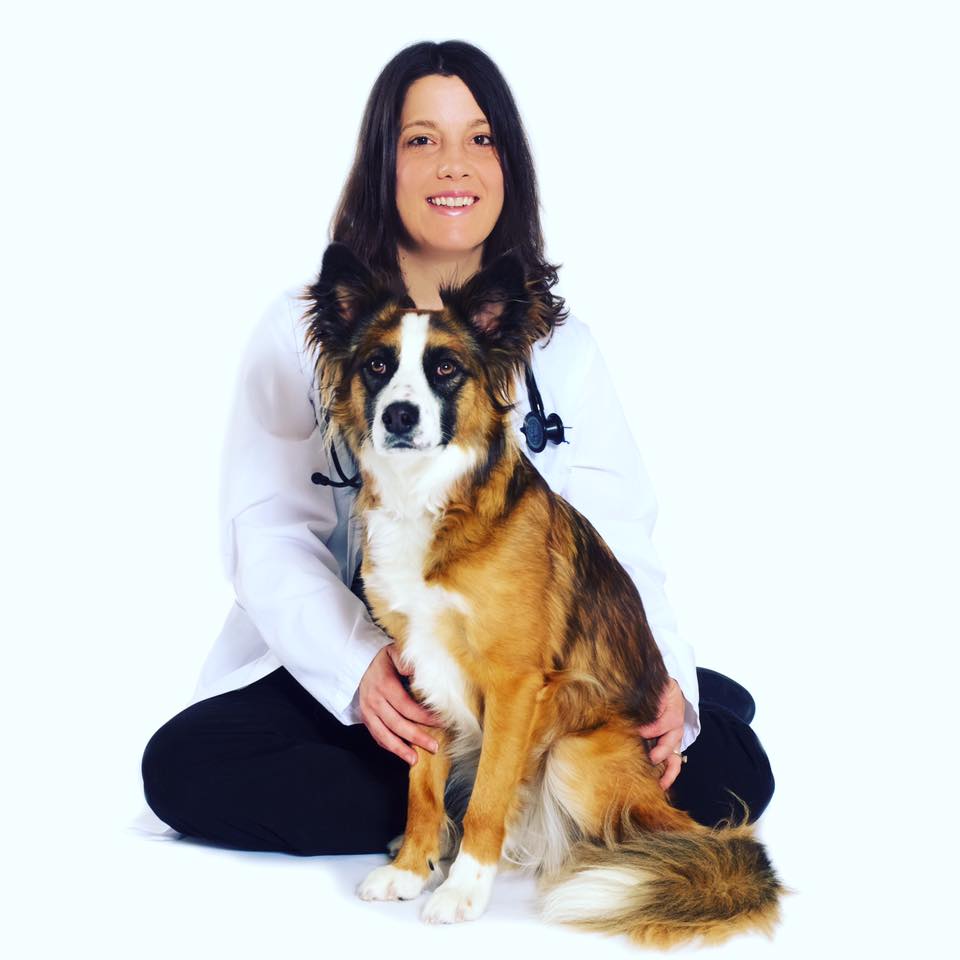
“Cardiology is more than treating the heart—it’s combining science, skill, and compassion to give every patient the greatest chance to thrive.”
Testimonials
What Our Clients Say
Dr. Bové is known for her expertise, professionalism, and compassionate approach to both patients and people. With experience across specialty cardiology, emergency medicine, general practice, mobile practice, and education, she is valued for clear communication, practical recommendations, and a collaborative style that helps pets, owners, and veterinary teams feel supported and confident.
"Dr. Bove is great to work with! She provides a reliable, helpful and caring telemedicine service. Her reports offer clear, detailed guidance, and she is responsive to questions."

“Dr. Bove is a consistently informative and inspiring speaker who brings both clarity and practicality to every presentation. Her ability to break down complex topics—whether in cardiology or wellness—into a clear, easy-to-follow framework has significantly expanded my knowledge and confidence in patient care. Beyond deepening my understanding of disease processes, her insights have also enhanced how I communicate with both pet parents and veterinary teams. Her passion for health and cardiology is truly contagious, and I highly recommend her for any speaking engagement.”

"Dr. Bove provides a wealth of knowledge with an emphasis on wellness both inside and outside the veterinary hospital. One of the most valuable tools she provides are short and long-form arrhythmia education. The arrhythmia pocket guides should be a staple in every clinic library from general practice to emergency and specialty. They provide quick ways of identifying arrhythmias and even more importantly, when intervention is warranted. I can honestly say that I am a more capable veterinarian because of Dr. Bove."

Inspire Cardiology Blogs
What Is a Heart Murmur? Understanding Murmurs in Dogs and Cats
What Is a Heart Murmur?
Understanding Murmurs in Dogs and Cats
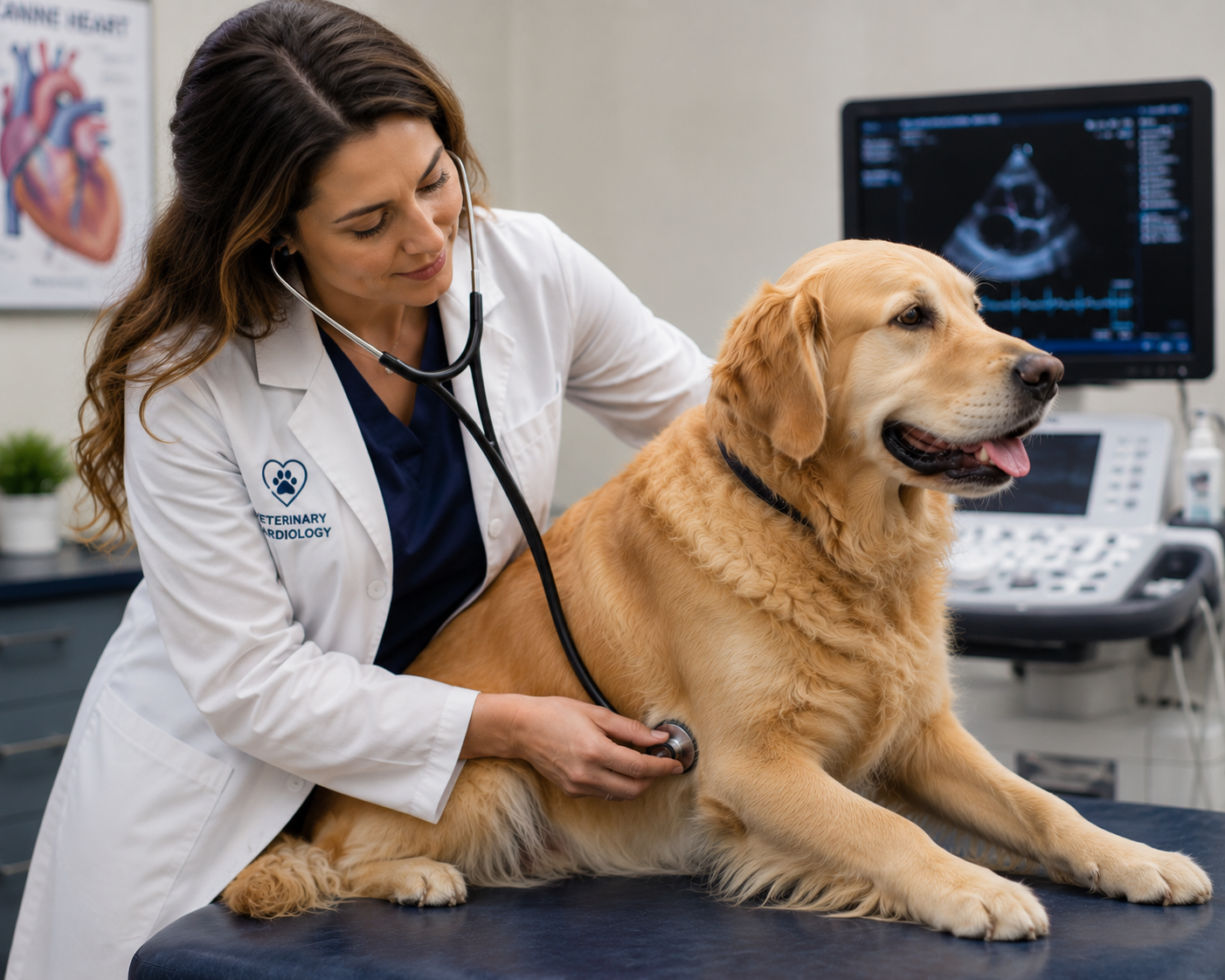
Heart murmurs are among the most common abnormalities identified during veterinary physical examinations. They can occur in both healthy animals and pets with underlying cardiovascular disease, making them an important clinical finding — but not a diagnosis in themselves.
In many cases, a murmur is simply an indicator of turbulent blood flow within the cardiovascular system. The clinical significance depends on why that turbulence is occurring.
Some murmurs are associated with structural heart disease, while others are physiologic or functional and may never progress or impact a pet’s quality of life.
Understanding the underlying pathophysiology of murmurs helps veterinarians determine:
Whether additional diagnostics are indicated
How likely structural disease may be
Whether monitoring or treatment is necessary
What Is a Heart Murmur?
A heart murmur is an audible sound generated by turbulent blood flow within the heart or great vessels.
Under normal conditions, blood flow is relatively smooth, or laminar. When velocity increases or blood flow becomes disrupted, vibrations are created that can be heard with a stethoscope as a murmur.
Murmurs are characterized by:
Timing within the cardiac cycle
Intensity (grade I–VI)
Point of maximal intensity
Radiation
Dynamic variability
Importantly, murmur intensity alone does not always correlate with disease severity, particularly in cats.
Why Do Murmurs Occur?
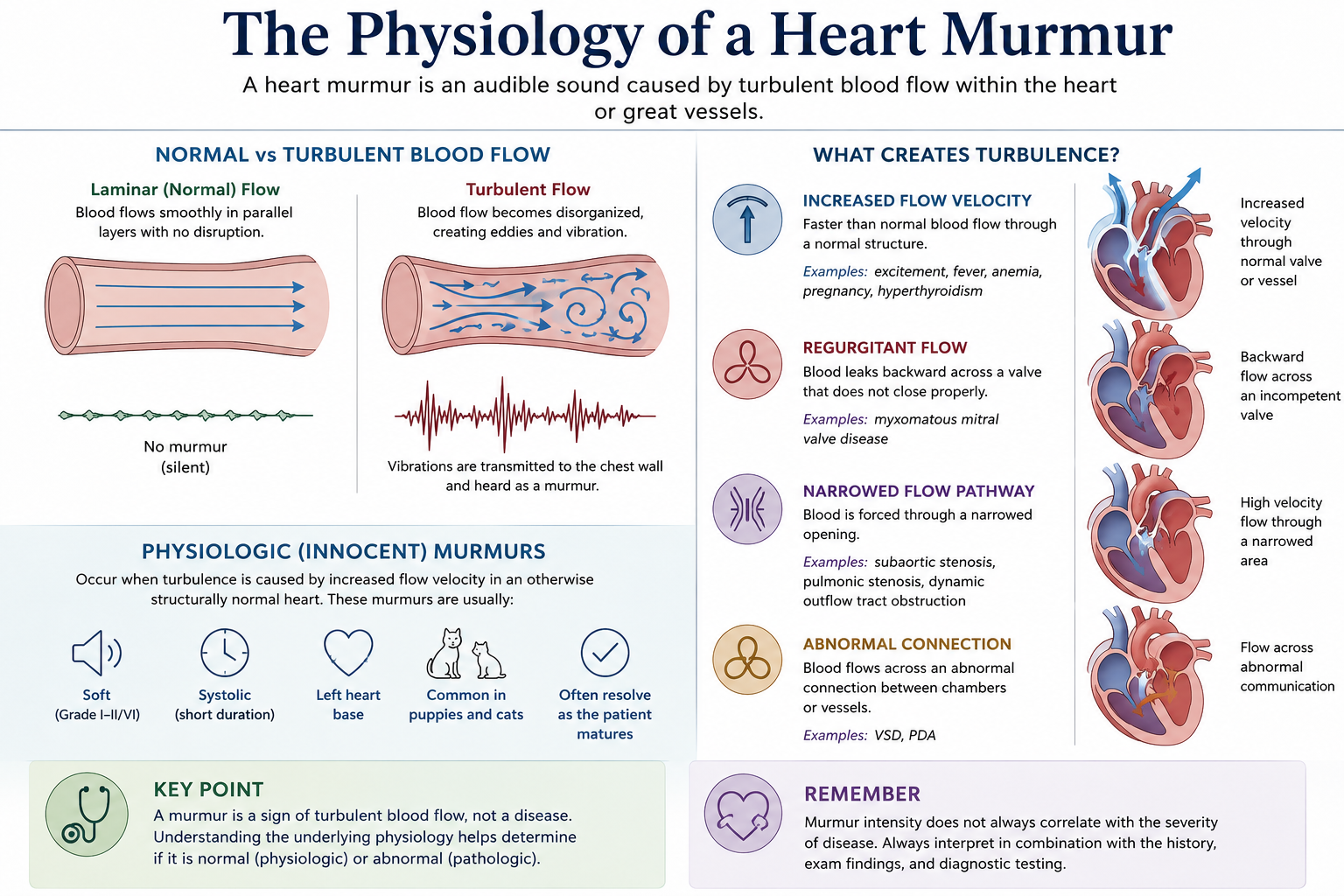
Murmurs develop whenever blood flow becomes sufficiently turbulent. This typically occurs because of:
Increased blood flow velocity
Regurgitant flow
Flow through narrowed structures
Abnormal communications between chambers or vessels
One of the key physiologic principles behind murmur formation is the: Reynolds Number
The Reynolds number helps predict whether blood flow remains smooth (laminar) or becomes turbulent.
Re=ρvDμRe = \frac{\rho v D}{\mu}Re=μρvD
The Reynolds number increases when:
Blood velocity increases,
Vessel diameter increases,
Blood viscosity decreases.
This helps explain why murmurs may occur in both normal and abnormal hearts.
For example:
Stress or excitement increases blood flow velocity,
Anemia decreases blood viscosity,
Narrowed valves or outflow tracts increase turbulence.
All of these changes increase the likelihood of audible turbulent blood flow and murmur formation.
Increased Blood Flow Velocity
One of the most common causes of murmurs — especially in young animals and cats — is increased blood flow velocity through an otherwise structurally normal heart.
This may occur with:
Excitement or stress
Fever
Anemia
Hyperthyroidism
Pregnancy
High sympathetic tone
These are commonly referred to as:
Functional murmurs
Physiologic murmurs
Innocent murmurs
Innocent or physiologic murmurs are well recognized in puppies, occurring in approximately 15–28% of clinically healthy individuals and often resolving as the cardiovascular system matures. Similar low-grade physiologic murmurs may also be auscultated in kittens and young cats, although feline data are more limited. In cats, sympathetic stimulation and dynamic blood flow changes likely contribute substantially to murmur development.
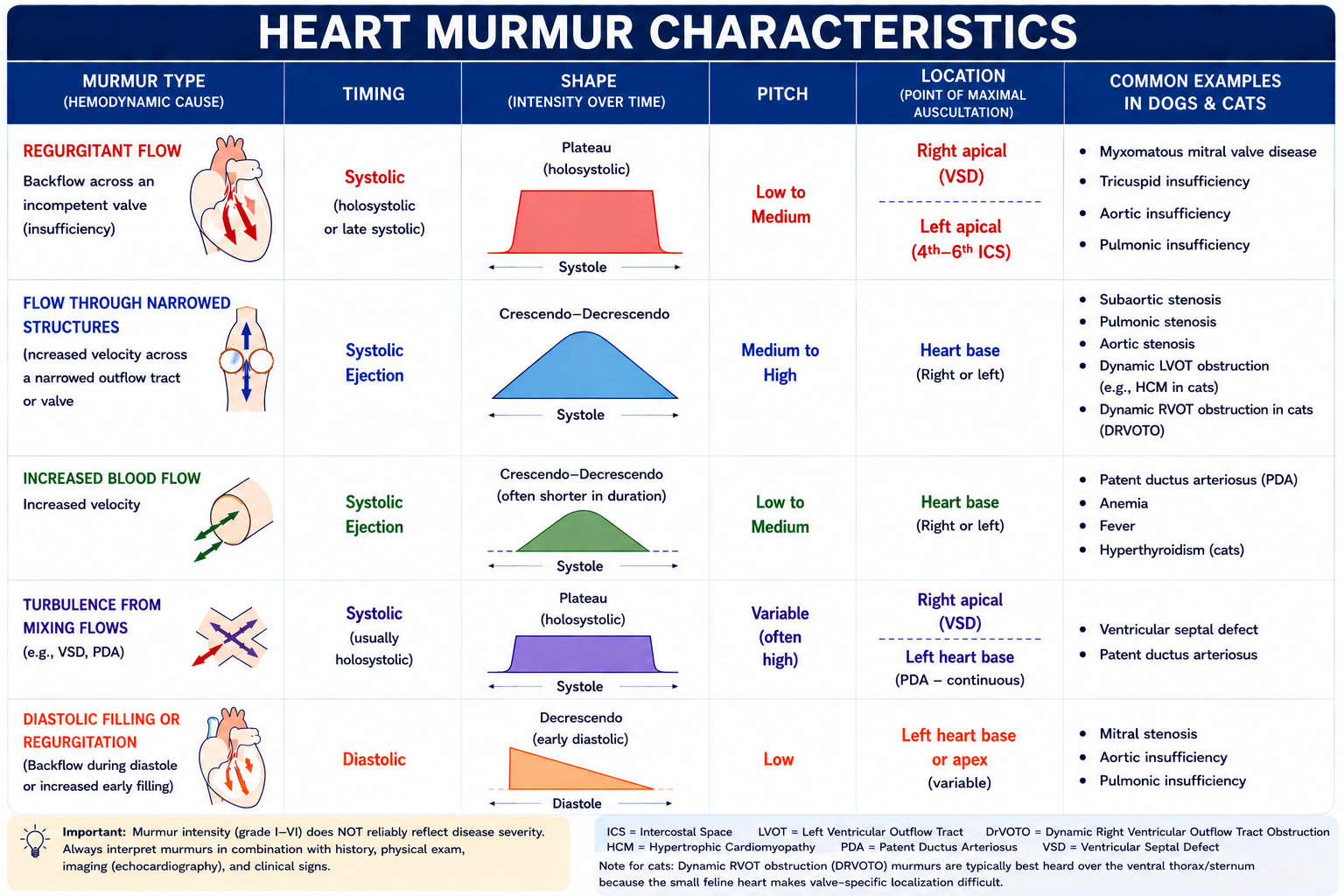
Regurgitant Flow
Murmurs caused by regurgitant flow occur when blood leaks backward through a valve that does not close completely. As blood moves rapidly from a high-pressure chamber into a lower-pressure chamber, turbulent flow develops, producing an audible murmur.
In dogs, the most common example is:
Myxomatous Mitral Valve Disease
In this condition, incomplete closure of the mitral valve during systole allows blood to flow backward from the left ventricle into the left atrium.
Regurgitant murmurs are typically:
Systolic, plateau-shaped (“holosystolic”), and heard best over the left cardiac apex
The intensity of the murmur is influenced by:
Blood flow velocity, pressure differences between chambers, chest wall conformation, body condition, and direction of turbulent flow.
Importantly, murmur loudness does not always correlate directly with disease severity.
Studies evaluating dogs with mitral valve disease have shown that some dogs with relatively loud murmurs may have only mild structural disease, while some dogs with advanced cardiac remodeling or heart failure may have softer murmurs due to changes in pressure gradients and cardiac function.
The ACVIM consensus guidelines emphasize that murmur grade alone should not be used to determine prognosis or severity of disease.
Based on Ljungvall et al.
Murmur intensity correlated somewhat with disease severity and chamber enlargement, but there was substantial overlap between stages, meaning murmur loudness alone could not reliably determine severity or prognosis.
This illustrates the limitations of auscultation alone for accurately determining disease severity.
Flow Through Narrowed Structures
Turbulence may also develop when blood is forced through a narrowed valve, vessel, or ventricular outflow tract. As the diameter of the structure decreases, blood velocity increases substantially, predisposing flow to become turbulent.
Common examples include:
Subaortic stenosis
Pulmonic stenosis
Small restrictive ventricular septal defects
Dynamic ventricular outflow tract obstructions
These lesions often produce:
Systolic ejection murmurs, typically with a crescendo-decrescendo character, heard best over the heart base.
In general, increasing velocity across a narrowed region results in greater turbulence and louder murmurs, although murmur intensity alone does not always perfectly correlate with overall disease severity.
Heart Murmurs in Cats: Why They’re So Confusing
Cats present a unique challenge because murmurs are extremely common, even in apparently healthy individuals.
Studies have reported murmurs in approximately 16–44% of healthy adult cats.
One of the most important concepts in feline cardiology is:
A murmur in a cat does not automatically indicate structural heart disease.
In a 2022 study (Ferasin et al) evaluating 856 cats with murmurs, 56.7% had no structural cardiac abnormalities identified on echocardiography.
This highlights why auscultation alone is often insufficient to determine clinical significance in feline patients.
Why Are Murmurs So Common in Cats?
Cats are highly sensitive to sympathetic stimulation.
Stress during veterinary visits may:
Increase heart rate
Alter loading conditions
Increase flow velocity
Create transient turbulence
A particularly common cause is:
Dynamic right ventricular outflow tract obstruction (DRVOTO)
The Ferasin study identified:
Systolic anterior motion (SAM) of the mitral valve, DRVOTO, and functional flow murmurs as some of the most common causes of murmurs in cats.
Many of these cats did not have clinically significant cardiomyopathy.
What Findings Increase Concern for Structural Heart Disease?
Many pets with murmurs are clinically normal. However, findings that may increase suspicion for clinically important disease include:
Exercise intolerance
Syncope
Arrhythmias
Weak pulses
Gallop rhythms
Evidence of cardiomegaly on thoracic radiographs
Increased respiratory rate/Respiratory distress
Particularly in cats, gallop rhythms and arrhythmias may actually be more predictive of structural disease a murmur.
How Are Murmurs Evaluated?
The gold standard for murmur evaluation is:
Echocardiography
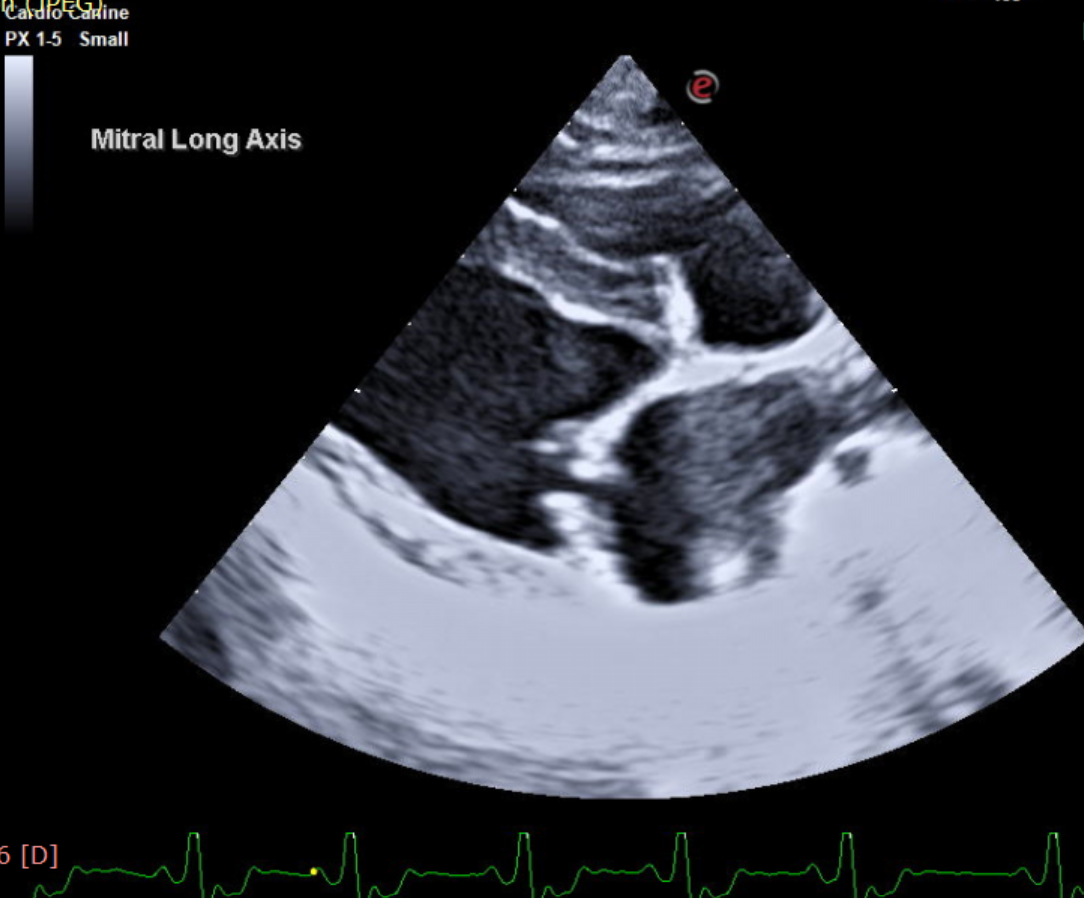
Echocardiography is considered the gold standard for evaluating heart murmurs in both dogs and cats because it allows direct visualization of the heart in real time. Unlike auscultation alone, which can only detect turbulent blood flow, an echocardiogram helps determine whether structural heart disease is truly present and defines the type and severity of disease. It allows detailed assessment of chamber size, ventricular wall thickness, valve morphology and motion, blood flow direction, outflow tract velocities, and overall cardiac function. Echocardiography can also identify congenital abnormalities, dynamic outflow tract obstructions, valvular disease, chamber enlargement, and complications associated with cardiomyopathy or congestive heart failure. Importantly, it helps differentiate benign or physiologic murmurs from clinically significant cardiac disease, which is critical for prognosis, anesthetic planning, monitoring recommendations, and treatment decisions in both dogs and cats.
Additional diagnostics may include:
Thoracic radiographs
Electrocardiography
Blood pressure measurement
NT-proBNP testing
Routine laboratory work
Importantly, not every murmur requires medication or intervention. In many cases, diagnostics are performed to establish a baseline, determine whether structural disease is present, and guide long-term monitoring recommendations.
Conclusion
Heart murmurs in dogs and cats are common clinical findings, but they are not diagnoses on their own. Some murmurs are associated with significant structural heart disease, while others may be physiologic, stress-related, or clinically insignificant. In cats especially, murmurs can be surprisingly nonspecific, and some patients with advanced cardiomyopathy may have only a soft murmur—or none at all.
Because murmur intensity alone cannot determine disease severity, further evaluation with echocardiography is often the best way to understand what is truly happening within the heart and guide monitoring, anesthetic planning, and treatment recommendations. Fortunately, many pets with murmurs continue to live long, happy, comfortable lives with appropriate care and follow-up.
Additional Resources
Download my free Dog Murmur Cheat Sheet
Find a board-certified veterinary cardiologist through the: ACVIM Veterinary Cardiologist Directory
References
Szatmári V, et al. Innocent cardiac murmur in puppies: prevalence and characteristics. Journal of Veterinary Internal Medicine. 2015.
Payne JR, et al. Prevalence of murmurs in apparently healthy cats. Journal of Veterinary Cardiology.
Ferasin L, et al. Prevalence and clinical significance of heart murmurs in cats. Veterinary Sciences. 2022.
Ljungvall I, Rishniw M, Porciello F, Ferasin L, Ohad DG. Murmur intensity in small-breed dogs with myxomatous mitral valve disease reflects disease severity. Journal of Small Animal Practice. 2014;55(11):545–550.
Keene BW, Atkins CE, Bonagura JD, et al. ACVIM Consensus Guidelines for the Diagnosis and Treatment of Myxomatous Mitral Valve Disease in Dogs. Journal of Veterinary Internal Medicine. 2019;33(3):1127–1140.
Campbell FE. WSAVA Cardiac Disease and Examination Guidelines.
Bonagura JD, Schober KE. Canine and feline cardiology. In: Ettinger SJ, Feldman EC, Côté E, eds. Textbook of Veterinary Internal Medicine. 8th ed. Elsevier; 2017.
Ettinger SJ, Feldman EC. Textbook of Veterinary Internal Medicine.

Want a simple, practical way to feel more confident reading ECGs?
Get my Free ECG Cheat Sheet
A quick-reference guide designed to help you recognize common arrhythmias and make faster clinical decisions in practice.
Want to work with me?
Whether you are seeking expert cardiology support, continuing education, telemedicine consultation, clinical resources, or an engaging speaker for your team or event, I’d love to connect. My goal is to provide practical, compassionate, and evidence-based solutions that help veterinary professionals and the patients they serve thrive.

Contact Us
LEGAL
FOLLOW US


Copyright . . All Rights Reserved.