Services
What We Offer
We take the stress out treating your cardiac patients

Courses
Comprehensive on-demand courses that break down complex cardiology concepts into practical, easy-to-follow lessons you can apply immediately in practice
Clinical Guides
Practical, evidence-based clinical guides designed to help veterinary professionals make confident decisions with clarity and efficiency. Focused on real-world application, these resources simplify complex cardiology for everyday practice.
Telemedicine
Expert telemedicine consultations led by a board-certified veterinary cardiologist, providing accessible case support, second opinions, and practical recommendations for cardiology patients
Speaking
Presentations led by a board-certified veterinary cardiologist with experience in general practice, emergency medicine, research, and wellness coaching. As a National Academy of Sports Medicine Certified Personal Trainer and Precision Nutrition certified coach in nutrition, sleep, stress, and recovery, I offer practical talks on cardiology and veterinary wellness.
My Story
Dr. Christina Bove
Christina Bové is a board-certified veterinary cardiologist dedicated to helping pets with heart disease live longer, healthier lives while supporting the veterinary teams who care for them. She earned her Doctor of Veterinary Medicine from Cornell University College of Veterinary Medicine. She did a combined cardiology residency and Master’s degree at Colorado State University College of Veterinary Medicine and Biomedical Sciences. She is a Diplomate of the American College of Veterinary Internal Medicine (Cardiology).

“Cardiology is more than treating the heart—it’s combining science, skill, and compassion to give every patient the greatest chance to thrive.”
Testimonials
What Our Clients Say
Dr. Bové is known for her expertise, professionalism, and compassionate approach to both patients and people. With experience across specialty cardiology, emergency medicine, general practice, mobile practice, and education, she is valued for clear communication, practical recommendations, and a collaborative style that helps pets, owners, and veterinary teams feel supported and confident.
"Dr. Bove is great to work with! She provides a reliable, helpful and caring telemedicine service. Her reports offer clear, detailed guidance, and she is responsive to questions."

“Dr. Bove is a consistently informative and inspiring speaker who brings both clarity and practicality to every presentation. Her ability to break down complex topics—whether in cardiology or wellness—into a clear, easy-to-follow framework has significantly expanded my knowledge and confidence in patient care. Beyond deepening my understanding of disease processes, her insights have also enhanced how I communicate with both pet parents and veterinary teams. Her passion for health and cardiology is truly contagious, and I highly recommend her for any speaking engagement.”

"Dr. Bove provides a wealth of knowledge with an emphasis on wellness both inside and outside the veterinary hospital. One of the most valuable tools she provides are short and long-form arrhythmia education. The arrhythmia pocket guides should be a staple in every clinic library from general practice to emergency and specialty. They provide quick ways of identifying arrhythmias and even more importantly, when intervention is warranted. I can honestly say that I am a more capable veterinarian because of Dr. Bove."

Inspire Cardiology Blogs
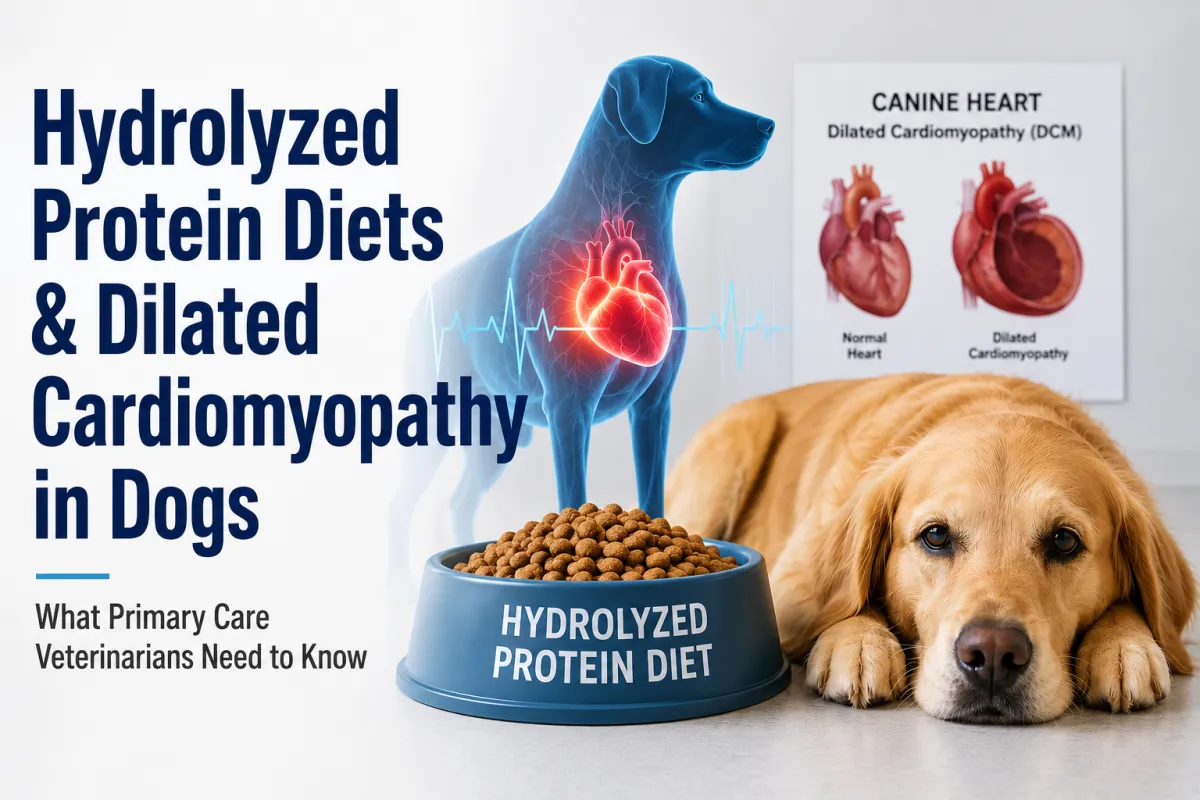
Hydrolyzed Protein Diets and Dilated Cardiomyopathy: Should We Be Concerned?
Hydrolyzed Protein Diets and Dilated Cardiomyopathy: Should We Be Concerned?
What Primary Care Veterinarians Need to Know About the Latest Research

By Christina Bové, DVM, MS, DACVIM (Cardiology)
A newly published study (Prevalence and description of dogs with dilated cardiomyopathy eating hydrolyzed protein diets) in the Journal of the American Veterinary Medical Association (JAVMA) has sparked important conversations within the veterinary community. The study evaluated dogs diagnosed with dilated cardiomyopathy (DCM) that were eating hydrolyzed protein diets, raising questions about whether these therapeutic diets could represent another nutritional risk factor for heart disease.
If you've already received emails from clients—or wondered whether you should recommend discontinuing hydrolyzed diets—you're not alone.
Fortunately, the paper's conclusions are far more nuanced than some headlines may suggest.
The short answer? This study is interesting and hypothesis-generating, but it is not practice-changing.
Let's break down what the study found, what it didn't find, and how it should influence our approach to canine patients.
First, Some Background
Since the FDA first announced an investigation into diet-associated dilated cardiomyopathy (DA-DCM) in 2018, most research has focused on diets containing high amounts of peas, lentils, chickpeas, other pulse ingredients, and potatoes.
Over the past several years, multiple studies have demonstrated that many dogs with suspected diet-associated DCM experience improvements in cardiac size and function after transitioning away from these diets while receiving appropriate medical therapy.
Hydrolyzed protein diets, however, have largely remained outside that conversation.
These diets are commonly prescribed for:
Food allergy
Chronic enteropathy
Inflammatory bowel disease
Adverse food reactions
Many dogs remain on these diets for years—or even for life.
Until now, there had been virtually no published research evaluating whether hydrolyzed diets themselves were associated with DCM.
What Did This Study Evaluate?
Investigators from CVCA Cardiac Care for Pets and Tufts University retrospectively reviewed 2,105 dogs diagnosed with dilated cardiomyopathy between 2018 and 2023.
Of those dogs:
2,072 (98.7%) were eating non-hydrolyzed diets
Only 28 dogs (1.3%) had been eating a hydrolyzed protein diet for at least three months before diagnosis
Importantly, none of the hydrolyzed diets contained pulse ingredients, making this population distinct from previously described diet-associated DCM cases.
Why This Paper Matters
This is the first published study specifically investigating hydrolyzed protein diets as a possible nutritional factor in dogs with DCM.
Dr. Lisa Freeman and colleagues have authored many of the landmark studies on diet-associated DCM, but previous work focused primarily on:
High-pulse diets
Nontraditional diets
Taurine deficiency
Metabolomics
Diet change following DCM diagnosis
This new study asks an entirely different question:
Could hydrolyzed diets represent another nutritional phenotype associated with DCM?
At this point, we simply don't know.
What Did the Authors Find?
The hydrolyzed diet group consisted of dogs with clinically significant disease.
At diagnosis:
61% had congestive heart failure
61% had cardiac arrhythmias
Most had been prescribed hydrolyzed diets because of:
Dermatologic disease (54%)
Gastrointestinal disease (21%)
Both gastrointestinal and dermatologic disease (14%)
Did Changing Diets Help?
This is the finding receiving the most attention.
Seven dogs were known to transition from a hydrolyzed diet to a non-hydrolyzed diet.
Only five dogs underwent follow-up echocardiography.
Those five demonstrated improvements in:
Left atrial size (LA:Ao)
Normalized left ventricular internal diameter in systole (nLVIDs)
There were also numerical improvements in left ventricular size and systolic function.
At first glance, this appears encouraging.
However, there's an important caveat.
Why These Results Must Be Interpreted Carefully
Every dog in the study received standard medical therapy for DCM.
All dogs received:
Pimobendan
Many also received:
Furosemide
ACE inhibitors
Spironolactone
Taurine
L-carnitine
Fish oil
These therapies are known to improve clinical status and can influence echocardiographic measurements.
Even more importantly, dogs that did not change diets also demonstrated improvement in systolic function, suggesting that medication likely contributed substantially to the observed changes.
For that reason, this study cannot determine whether improvement resulted from diet change, cardiac medications, or both.
The Biggest Limitation
Perhaps the single most important limitation is one that is easy to overlook.
The study found that 1.3% of dogs with DCM were eating hydrolyzed diets.
But it never answers a much more important question:
How many healthy dogs are eating hydrolyzed diets?
Without a healthy comparison population, we cannot determine whether hydrolyzed diets are more common, less common or exactly as common among dogs with DCM.
In other words, the study reports prevalence, but it cannot estimate risk.

Other Important Weaknesses
Like any retrospective study, this paper has several limitations.
Small Sample Size
Although over 2,000 dogs were reviewed, only 28 hydrolyzed-diet dogs met inclusion criteria.
The key analysis was based on just five dogs with diet change and repeat echocardiography.
Retrospective Design
Medical records were incomplete for many patients.
Investigators frequently lacked information regarding:
Exact duration of feeding
Treats and supplements
Previous diets
Reasons for diet selection
Whether diets were changed
Long-term outcomes
Medication Confounding
Because all dogs received standard heart failure therapy, improvements cannot be attributed solely to dietary modification.
Loss to Follow-Up
Nearly half the dogs were lost to follow-up, making survival analysis impossible.
No Mechanistic Evidence
Only two dogs had taurine measured.
Both values were normal.
The investigators did not evaluate:
Amino acid digestibility
Metabolomics
Nutrient bioavailability
Genetics
Myocardial histopathology
At present, there is no identified biological mechanism linking hydrolyzed diets to DCM.
Did the FDA Investigate Hydrolyzed Diets?
No.
The FDA's investigation into diet-associated DCM focused primarily on diets rich in pulse ingredients such as peas and lentils.
Hydrolyzed diets were not analyzed separately, and the FDA has never issued recommendations against feeding hydrolyzed protein diets.
This publication therefore represents a new clinical observation—not confirmation of an existing FDA concern.
What Should Primary Care Veterinarians Do?
At this point, I am not recommending that healthy dogs be removed from hydrolyzed diets because of this paper.
Many of these diets are medically necessary and successfully manage:
Chronic enteropathy
Food allergy
Atopic disease
Adverse food reactions
The proven benefits of these diets often outweigh an unproven theoretical cardiac concern.
However, I do think this paper changes one aspect of my clinical approach.
When evaluating any dog with suspected or confirmed DCM, I now routinely ask about:
Traditional vs. nontraditional diets
Grain-free diets
High-pulse diets
Treats and supplements
Hydrolyzed protein diets
If a dog with DCM is eating a hydrolyzed diet and there is no compelling medical reason to continue it, I believe it is reasonable to discuss transitioning to a balanced non-hydrolyzed diet in collaboration with the veterinarian managing the patient's gastrointestinal or dermatologic disease.
If the hydrolyzed diet remains medically necessary, I would continue the diet while treating the heart disease appropriately and monitoring cardiac response over time.
Should We Start Screening Dogs on Hydrolyzed Diets with NT-proBNP?
One question I've already been asked by several colleagues is whether this study should change our screening approach. Specifically, should clinically healthy dogs eating hydrolyzed protein diets undergo routine NT-proBNP testing?
At this time, my answer is no.
This study does not demonstrate that hydrolyzed diets increase the risk of developing DCM, nor does it evaluate NT-proBNP as a screening strategy. The investigators identified only 28 dogs eating hydrolyzed diets among more than 2,100 dogs diagnosed with DCM, and there was no healthy comparison population to determine whether hydrolyzed-fed dogs are truly at increased risk.
Without evidence that hydrolyzed diets independently increase the likelihood of occult cardiac disease, routine biomarker screening in every asymptomatic dog would likely result in unnecessary testing, additional expense, and occasional false-positive results.
When Might NT-proBNP Be Helpful?
Although I do not recommend universal screening, NT-proBNP remains a valuable diagnostic tool when used appropriately.
I would consider NT-proBNP in a dog eating a hydrolyzed diet if additional risk factors are present, including:
A newly detected heart murmur or gallop rhythm
Cardiac arrhythmias or ventricular ectopy
Exercise intolerance, weakness, syncope, coughing, or increased resting respiratory rate
A breed with a known predisposition to DCM
Cases where echocardiography is not readily available but concern for occult heart disease exists
Importantly, NT-proBNP should never be interpreted in isolation. Elevated concentrations indicate increased myocardial wall stress but are not specific for DCM and may occur with other forms of cardiac disease. Likewise, a normal NT-proBNP does not completely exclude occult DCM, particularly in dogs with primarily arrhythmic disease.
My Clinical Take-Home
So, where does this leave us as primary care veterinarians?
At this point, I am not recommending routine NT-proBNP screening or echocardiography solely because a dog is eating a hydrolyzed protein diet. This study does not establish that hydrolyzed diets increase the risk of developing DCM, nor does it evaluate whether routine biomarker screening improves outcomes. With only 28 hydrolyzed-fed dogs identified among more than 2,100 dogs with DCM—and no healthy comparison population—we simply do not have enough evidence to justify universal cardiac screening based on diet alone.
Instead, I believe the most evidence-based approach is to:
Obtain a thorough dietary history in every dog with suspected or confirmed cardiac disease, including hydrolyzed diets alongside traditional, nontraditional, and high-pulse diets.
Continue careful cardiovascular examinations during routine wellness visits, paying close attention to new murmurs, gallop rhythms, arrhythmias, or subtle clinical signs.
Use NT-proBNP, echocardiography, ECG, or Holter monitoring selectively when clinical findings, breed predisposition, or history raise concern—not simply because a dog is eating a hydrolyzed diet. Remember that NT-proBNP is a useful screening tool, but it is not specific for DCM, and a normal result does not completely exclude occult disease, particularly in dogs with primarily arrhythmic forms of cardiomyopathy.
Individualize recommendations based on each patient's cardiac, gastrointestinal, and dermatologic needs rather than adopting blanket screening or diet-change protocols based on a single retrospective study.
One of the greatest lessons from the original diet-associated DCM investigation was the importance of asking better nutritional questions. I believe this study reinforces that message. While hydrolyzed diets have not historically been part of our routine dietary assessment for dogs with DCM, they probably should be moving forward. That does not mean these diets have been shown to cause heart disease—it simply means they deserve consideration as part of a complete nutritional history.
Most importantly, this study raises an important question—but it does not answer it.
Hydrolyzed diets should now become part of every comprehensive dietary history in dogs with DCM, but this paper does not demonstrate that hydrolyzed protein diets cause dilated cardiomyopathy. Rather, it identifies a small group of dogs that warrants further investigation.
Like the earliest publications on diet-associated DCM nearly a decade ago, this study provides an intriguing clinical signal—not definitive proof. Prospective studies with healthy control populations, standardized dietary histories, serial cardiac evaluations, and mechanistic research will be essential before we can determine whether hydrolyzed diets represent an independent nutritional risk factor or simply identify a unique population of medically complex dogs.
Until then, thoughtful interpretation—not alarm—is the most evidence-based response.
As veterinarians, our responsibility is not to overreact to every new publication, nor to dismiss early observations that may prove important. It is to critically evaluate the evidence, integrate it with the broader body of literature, and make balanced recommendations tailored to each individual patient. That's how we'll continue to provide the best care for our patients while advancing our understanding of diet-associated heart disease.
Key Clinical Takeaway: Don't stop prescribing hydrolyzed diets based on this paper alone. Instead, broaden your dietary history in dogs with DCM, individualize recommendations, and continue to follow the evolving evidence.
References
Whelchel BD, Rush JE, Ma Y, Freeman LM. Prevalence and description of dogs with dilated cardiomyopathy eating hydrolyzed protein diets. J Am Vet Med Assoc. 2026;264(7).
Freeman LM, Stern JA, Fries R, Adin DB, Rush JE. Diet-associated dilated cardiomyopathy in dogs: What do we know? J Am Vet Med Assoc. 2022;260(12):1397-1415.
Freeman LM, Rush JE, Adin DB, et al. Prospective study of dilated cardiomyopathy in dogs eating nontraditional or traditional diets and in dogs with subclinical cardiac abnormalities. J Vet Intern Med. 2022;36:451-463.
Walker AL, DeFrancesco TC, Bonagura JD, et al. Association of diet with clinical outcomes in dogs with dilated cardiomyopathy and congestive heart failure. J Vet Cardiol. 2022;40:99-109.
Fischer KE, Rush JE, Freeman LM. Pit bull–type breeds with dilated cardiomyopathy eating nontraditional diets improve after diet change (2015–2022). J Am Vet Med Assoc. 2023;261:1011-1019.
U.S. Food and Drug Administration. FDA Investigation into Potential Link Between Certain Diets and Canine Dilated Cardiomyopathy. Updated 2024.

Want a simple, practical way to feel more confident reading ECGs?
Get my Free ECG Cheat Sheet
A quick-reference guide designed to help you recognize common arrhythmias and make faster clinical decisions in practice.
Want to work with me?
Whether you are seeking expert cardiology support, continuing education, telemedicine consultation, clinical resources, or an engaging speaker for your team or event, I’d love to connect. My goal is to provide practical, compassionate, and evidence-based solutions that help veterinary professionals and the patients they serve thrive.

Contact Us
LEGAL
FOLLOW US


Copyright . . All Rights Reserved.